Connector fundamentals9 min
How to Find the Correct Mating Connector: An Engineer’s Workflow
A repeatable method for identifying a connector mate from an MPN, drawing, or physical sample without relying on product-description guesswork.
Read guide
Author and founder
Parker Langlois is an industrial designer and the founder of ProFind. He is building practical tools that turn connector selection, compatibility checks, and assembly planning into a clear, reviewable engineering workflow.
ProFind Field Notes
30 connector engineering guides
A repeatable method for identifying a connector mate from an MPN, drawing, or physical sample without relying on product-description guesswork.
Read guide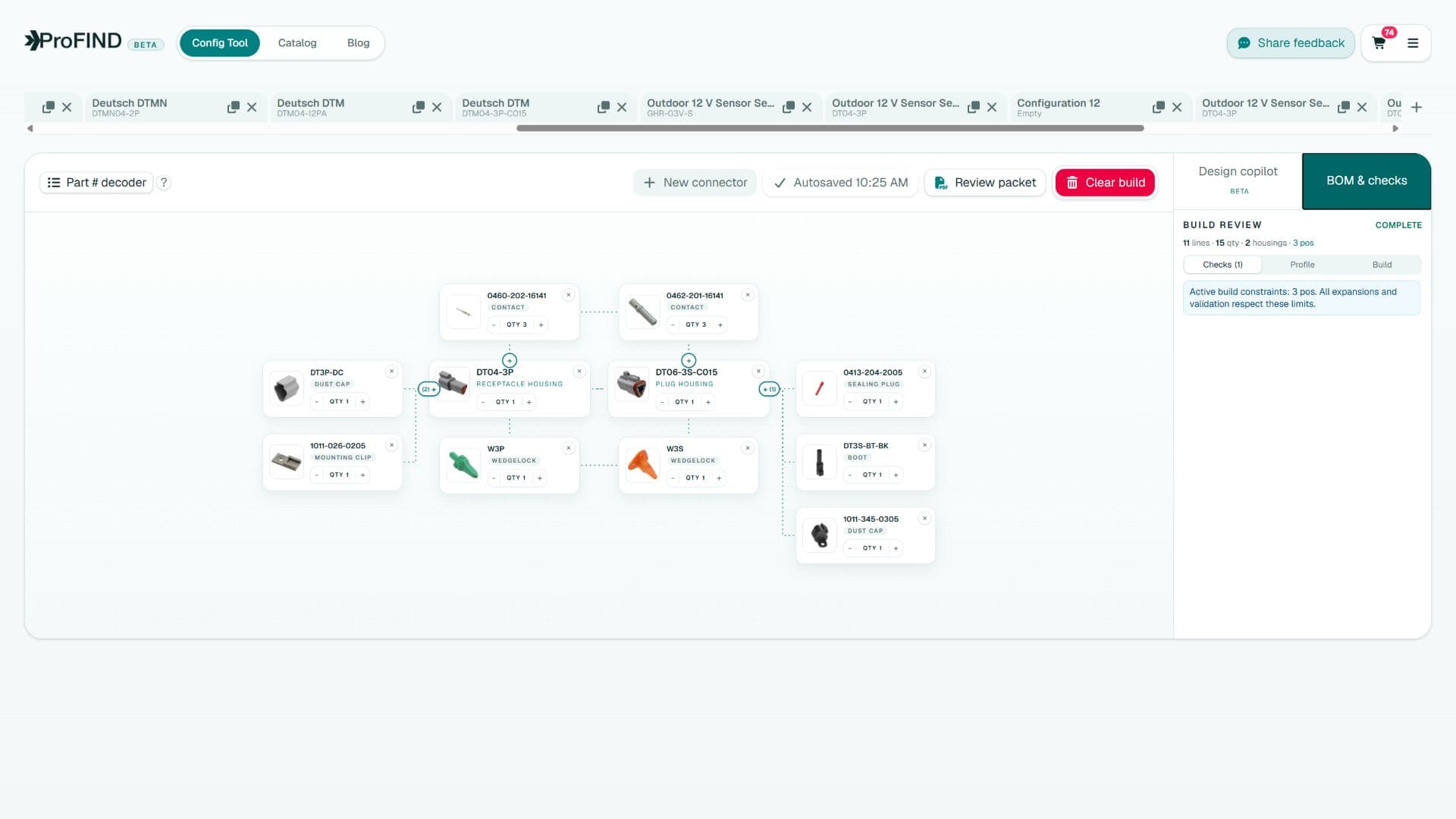
Mechanical mating is only one layer of connector compatibility. Learn the electrical, environmental, assembly, and lifecycle checks engineers need.
Read guide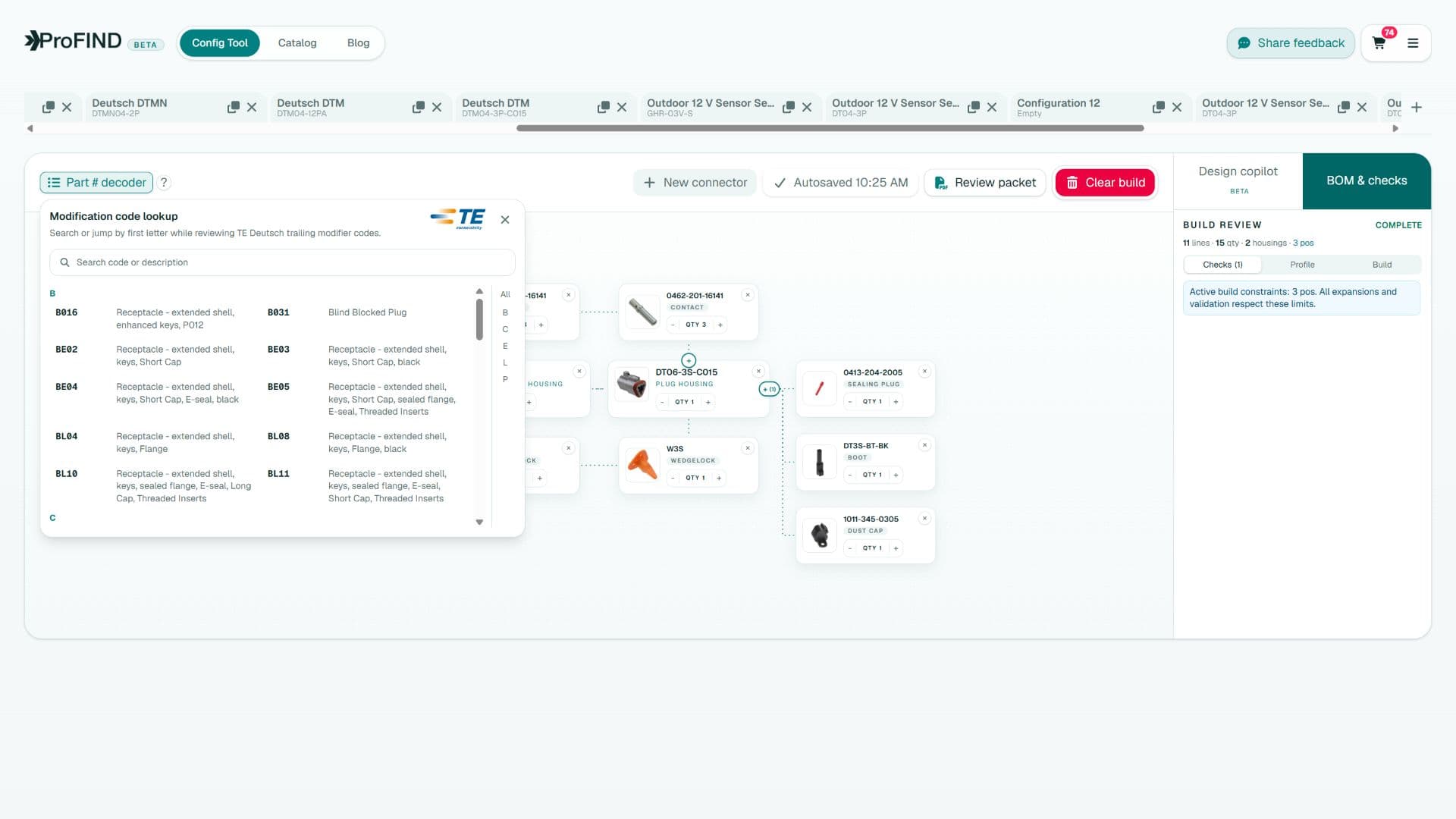
Learn how connector MPNs encode family, shell, cavity count, contact system, keying, sealing, and modification details—and where parsing can go wrong.
Read guide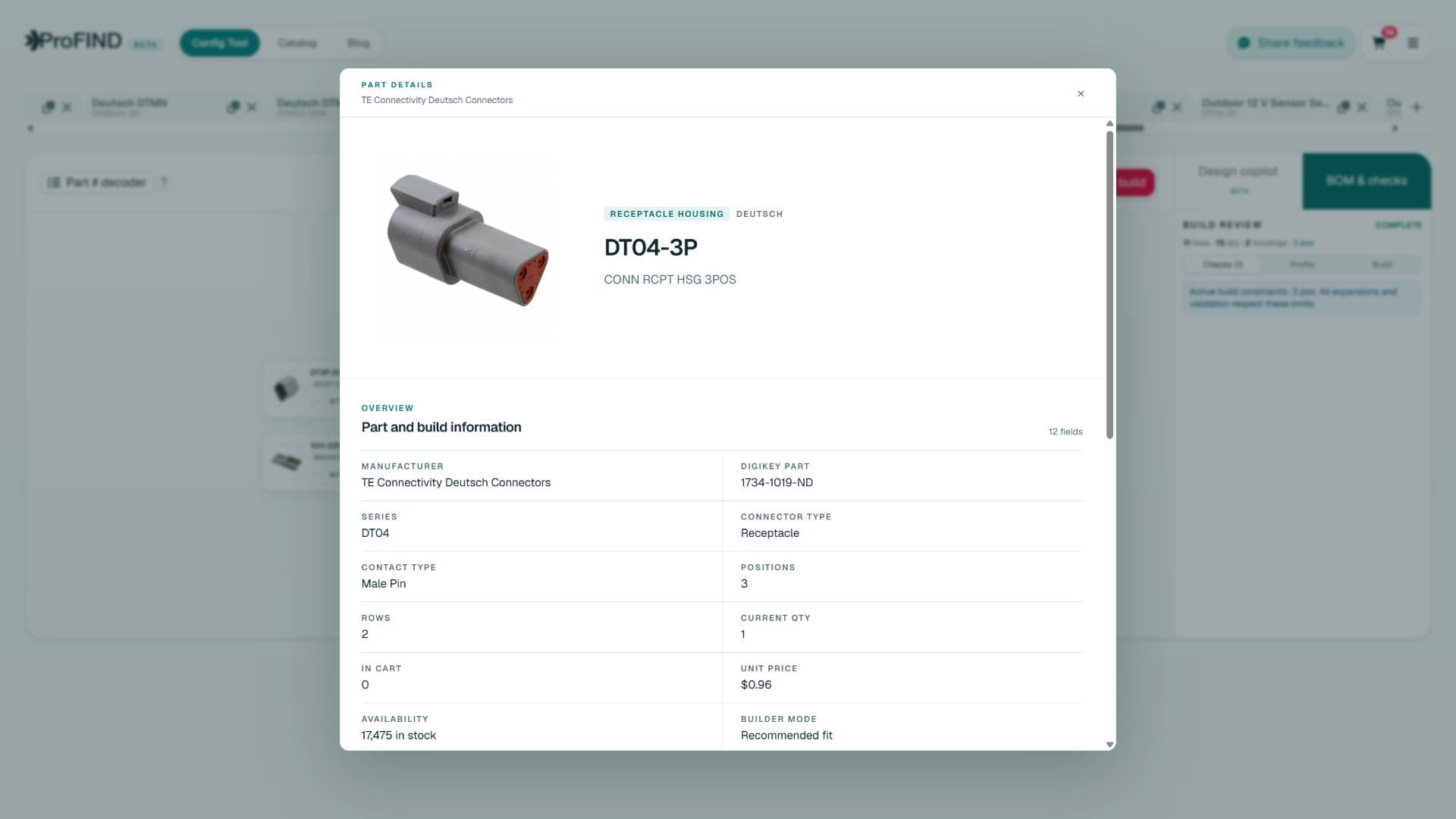
Understand mechanical keys, color codes, cavity layouts, and circuit architecture techniques that stop the wrong connectors from mating.
Read guide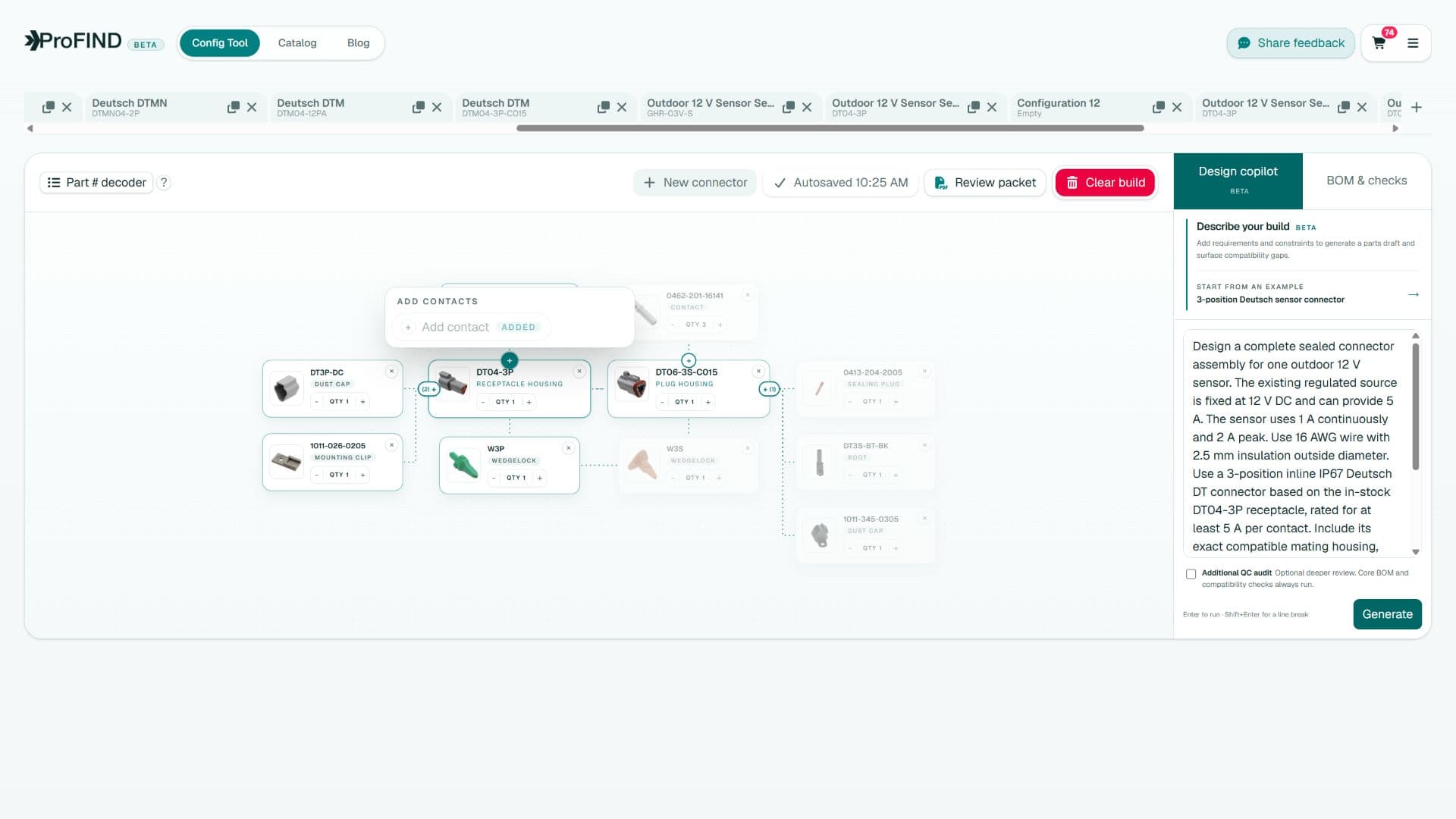
Select connector contacts using conductor size, insulation diameter, current, temperature, voltage drop, and crimp requirements—not AWG alone.
Read guideA practical guide to Deutsch DT housings, contacts, wedgelocks, keying, seals, and tooling for reliable field-ready connections.
Read guide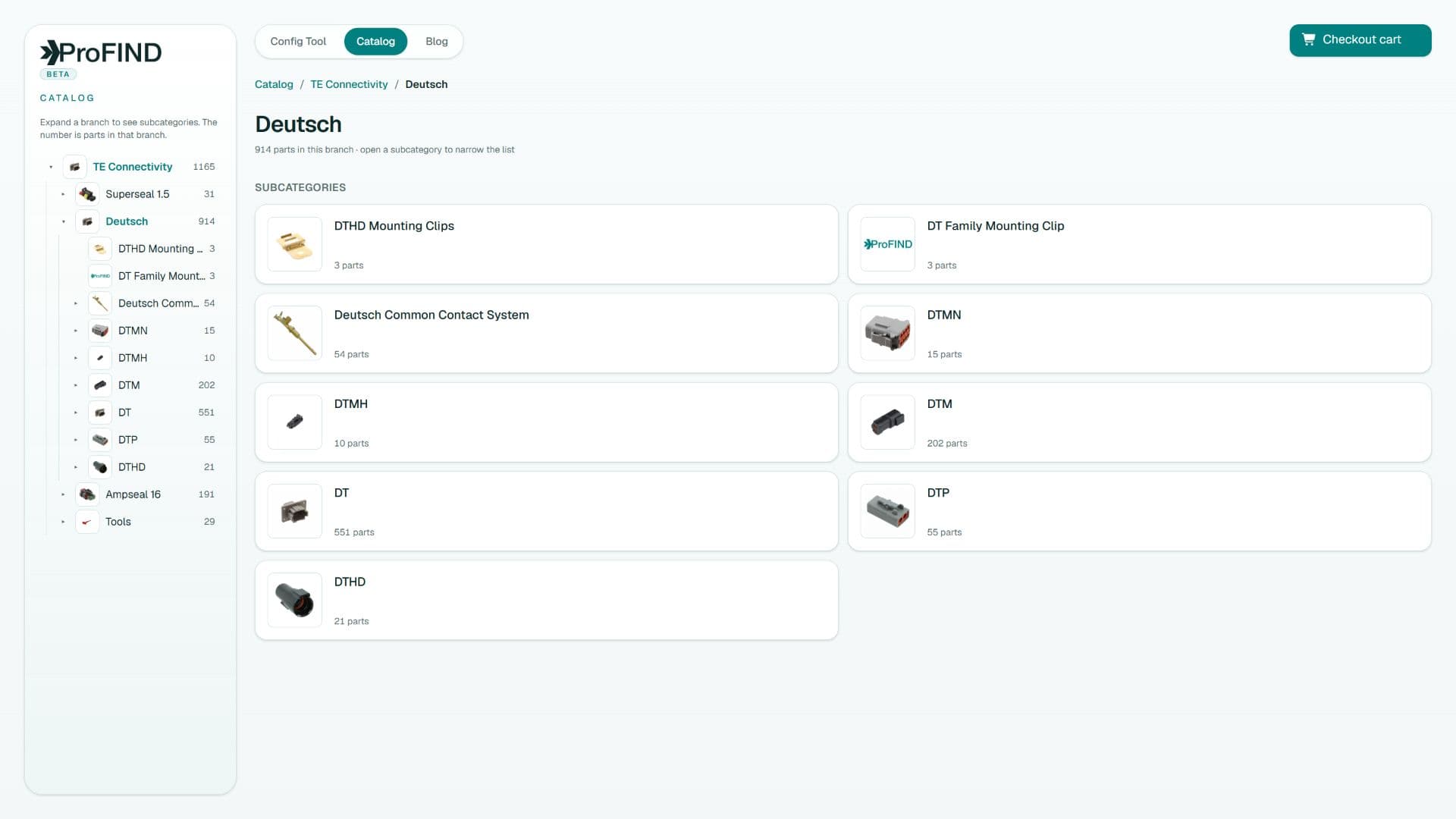
Compare Deutsch DTM, DT, and DTP connector families by contact size, circuit density, wire range, current needs, and application fit.
Read guideHow to evaluate Deutsch DTHD single-cavity connectors for higher-current sealed circuits, including wire, terminals, sealing, derating, and service.
Read guide
A system-level guide to AMPSEAL 16 connector selection, mating, contacts, sealing, keying, conduit backshells, and assembly checks.
Read guideChoose Superseal 1.5 housings, terminals, wire seals, cavity plugs, and tools as one validated automotive connector assembly.
Read guide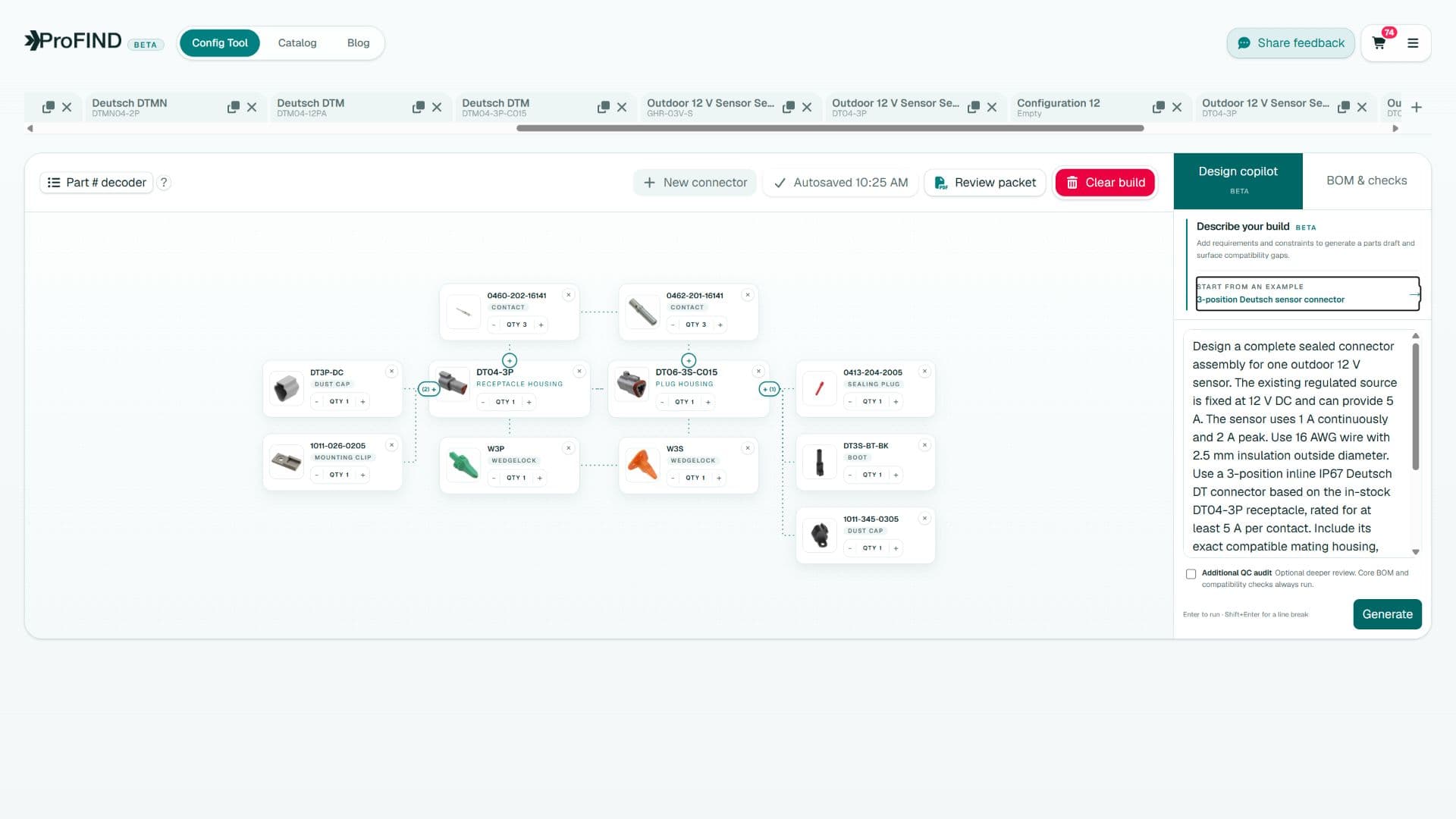
Understand IP67 and IP68 connector ratings, test conditions, assembly dependencies, and the extra evidence needed for pressure wash, fluids, vibration, and field use.
Read guideA release-ready connector bill-of-materials checklist covering housings, contacts, seals, locks, accessories, tooling, and validation evidence.
Read guideMatch terminals, wire, applicators, hand tools, locators, and process controls without treating a generic ratchet tool as universal.
Read guideA practical connector-crimp quality plan covering strip length, crimp height, cross-sections, pull tests, terminal retention, and electrical validation.
Read guideLearn the difference between terminal-position assurance, connector-position assurance, and family-specific wedgelocks—and how to specify them.
Read guideSelect connector wire seals using actual insulation outside diameter, terminal geometry, cavity system, and assembly requirements.
Read guideChoose connector rear accessories for cable support, bend control, sealing, conduit, abrasion, shielding, and field service without assuming fit.
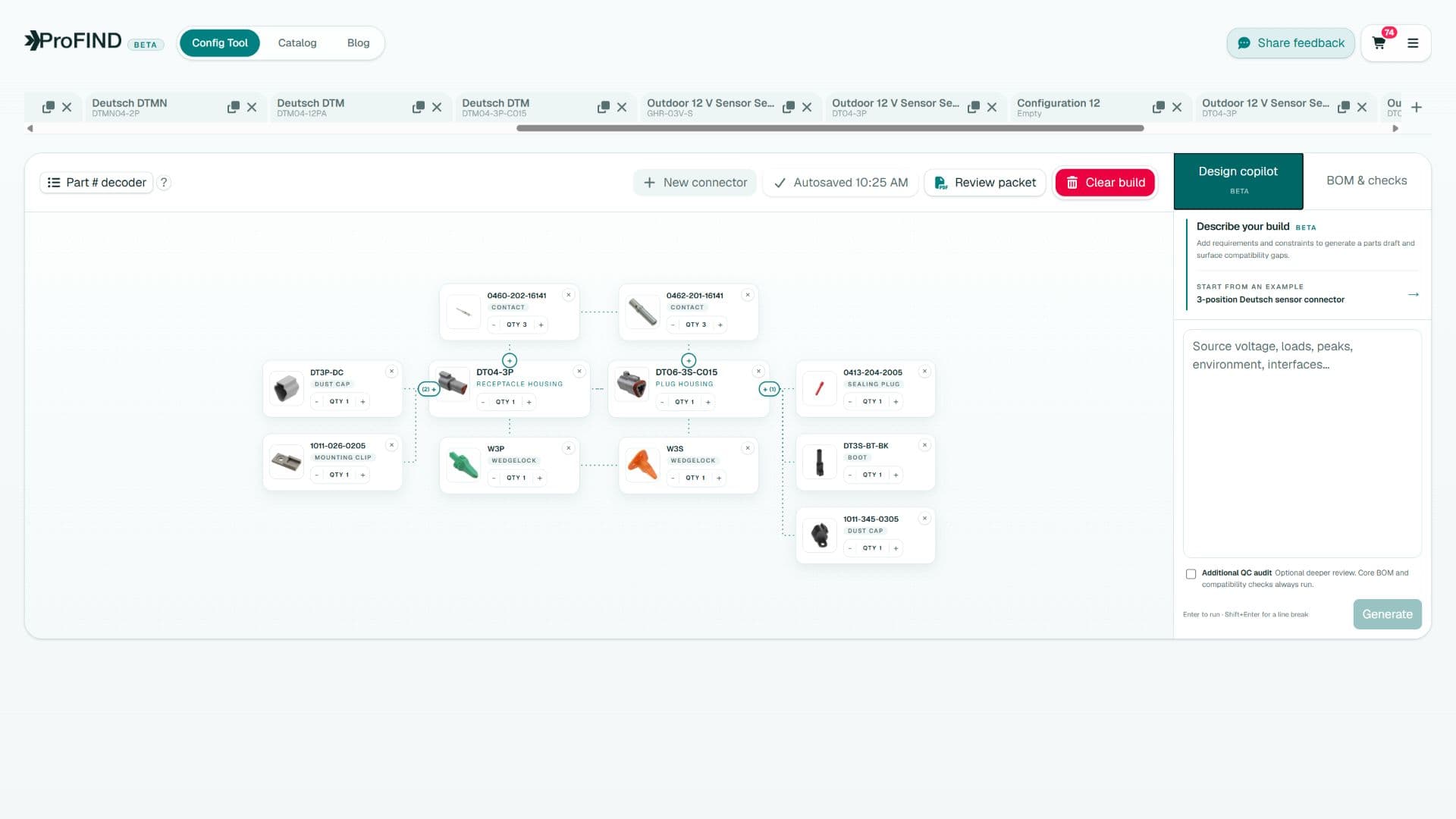
Read guideUse ProFind’s visual compatibility graph to start from one connector, add proven mates and accessories, find omissions, and export a reviewable BOM.
Read guideTurn natural-language circuit, wire, environment, and packaging requirements into a reviewable connector graph with ProFind Design Copilot.
Read guideA teachable connector-selection method for capstone, robotics, Formula SAE, Baja, rocketry, and lab projects—from requirements to validated BOM.
Read guideChoose, assemble, document, and service connectors for Formula SAE electrical systems under vibration, weather, tight packaging, and team turnover.
Read guideSelect connectors for mobile robots and machines by separating power, motors, sensors, data, motion, environmental exposure, and field service needs.
Read guideEvolve connector choices from bench prototypes to controlled production by adding traceability, tooling, validation, sourcing, assembly, and service evidence.
Read guide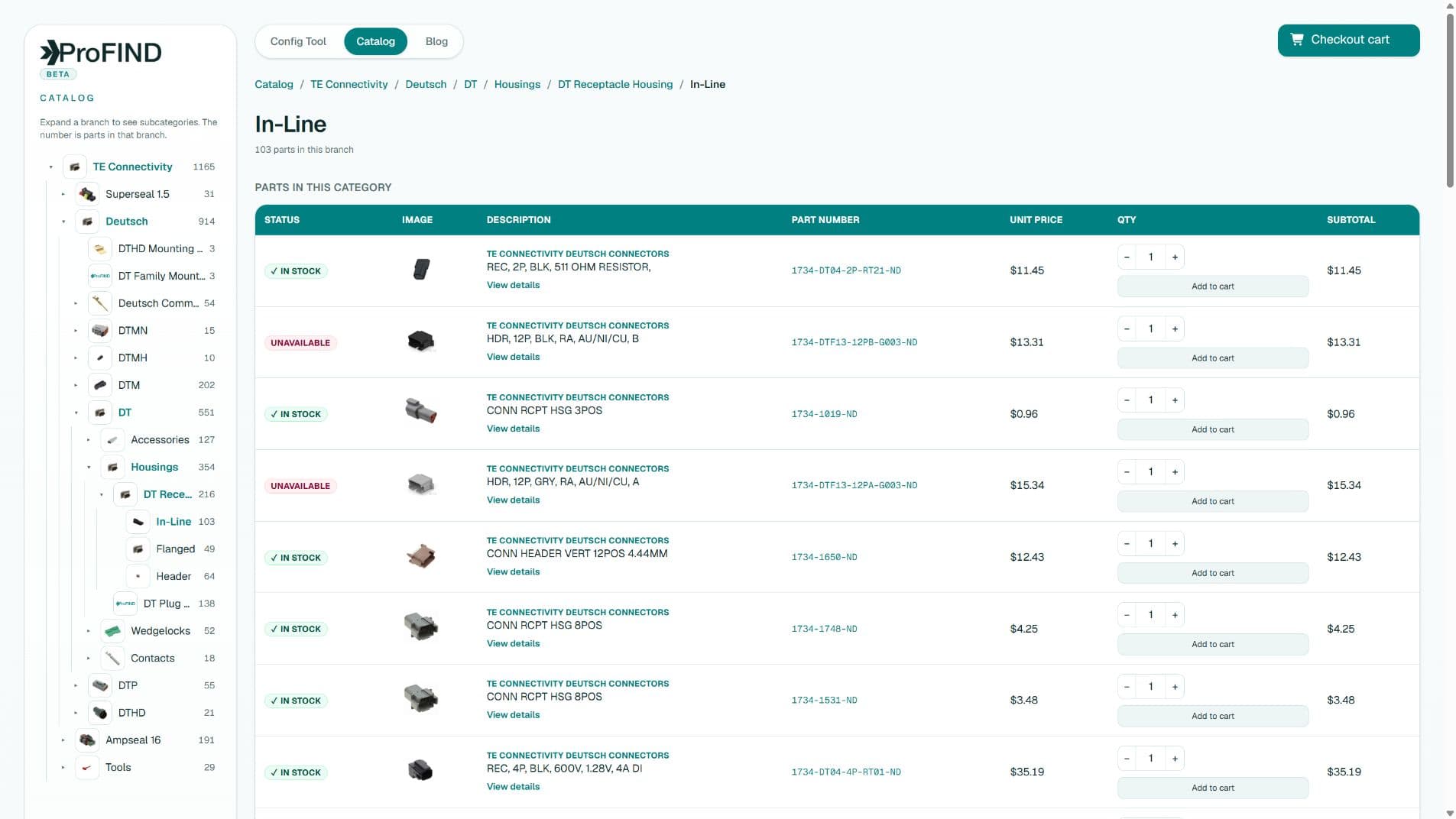
Reduce connector sourcing risk with exact MPN control, authorized channels, traceability, incoming inspection, and variant-level compatibility checks.
Read guideEvaluate connector replacements by interface, contacts, seals, tooling, ratings, materials, documentation, and lifecycle—not part-number similarity.
Read guideReduce connector supply risk with assembly-level alternates, lifecycle monitoring, inventory strategy, tooling review, and controlled change paths.
Read guideA staged verification plan for connector identity, mating, contacts, seals, tooling, electrical load, environment, and pilot assembly.
Read guideUnderstand how product descriptions, parametric filters, indexing, gender labels, and family grouping can produce wrong connector matches.
Read guideInterpret connector current ratings using contact resistance, wire size, ambient temperature, loaded cavities, duty cycle, and allowable temperature rise.
Read guide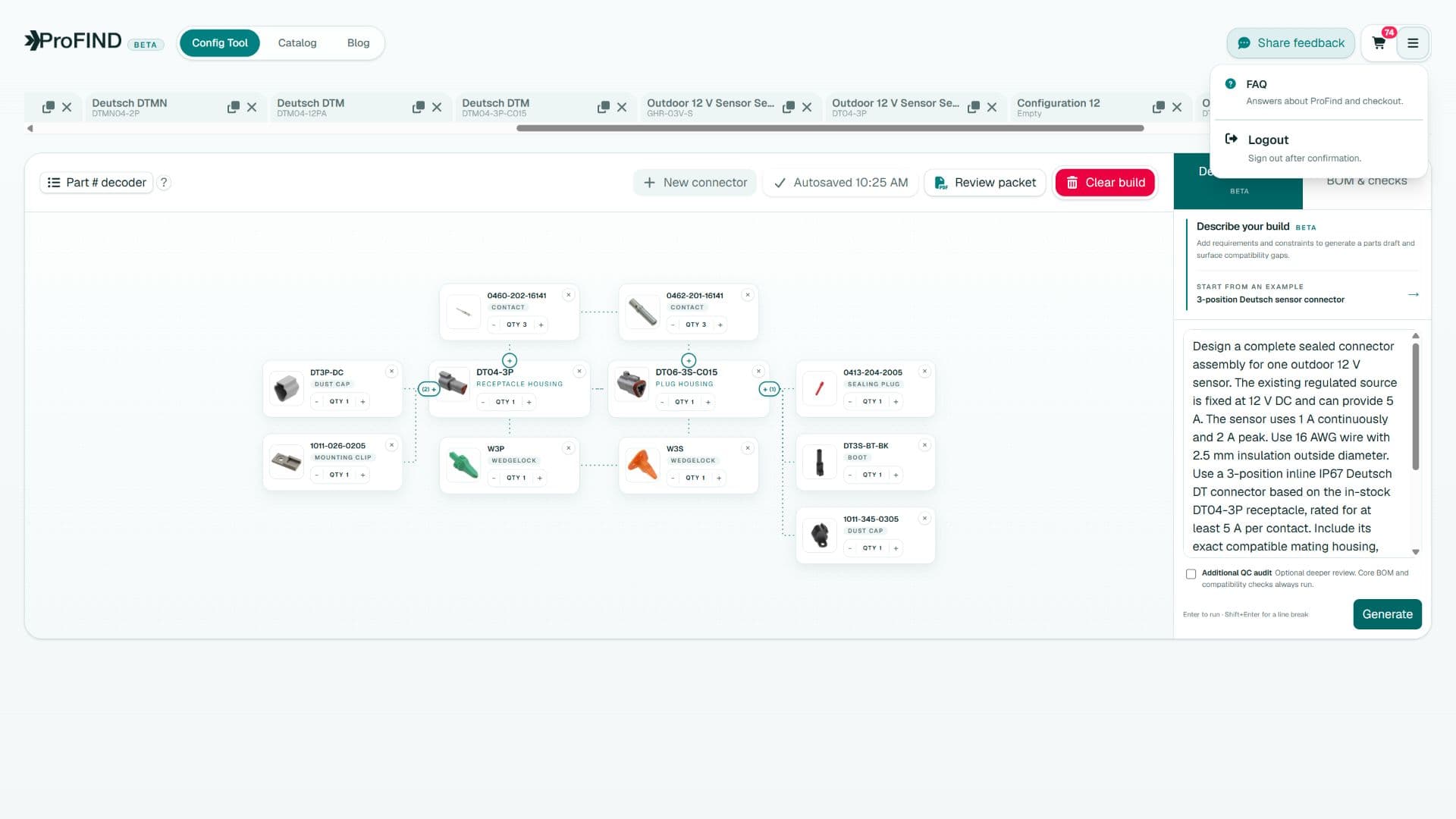
Create a connector design record that keeps exact MPNs, cavity maps, compatibility evidence, tooling, validation, and future changes synchronized.
Read guide